Mini Minecraft
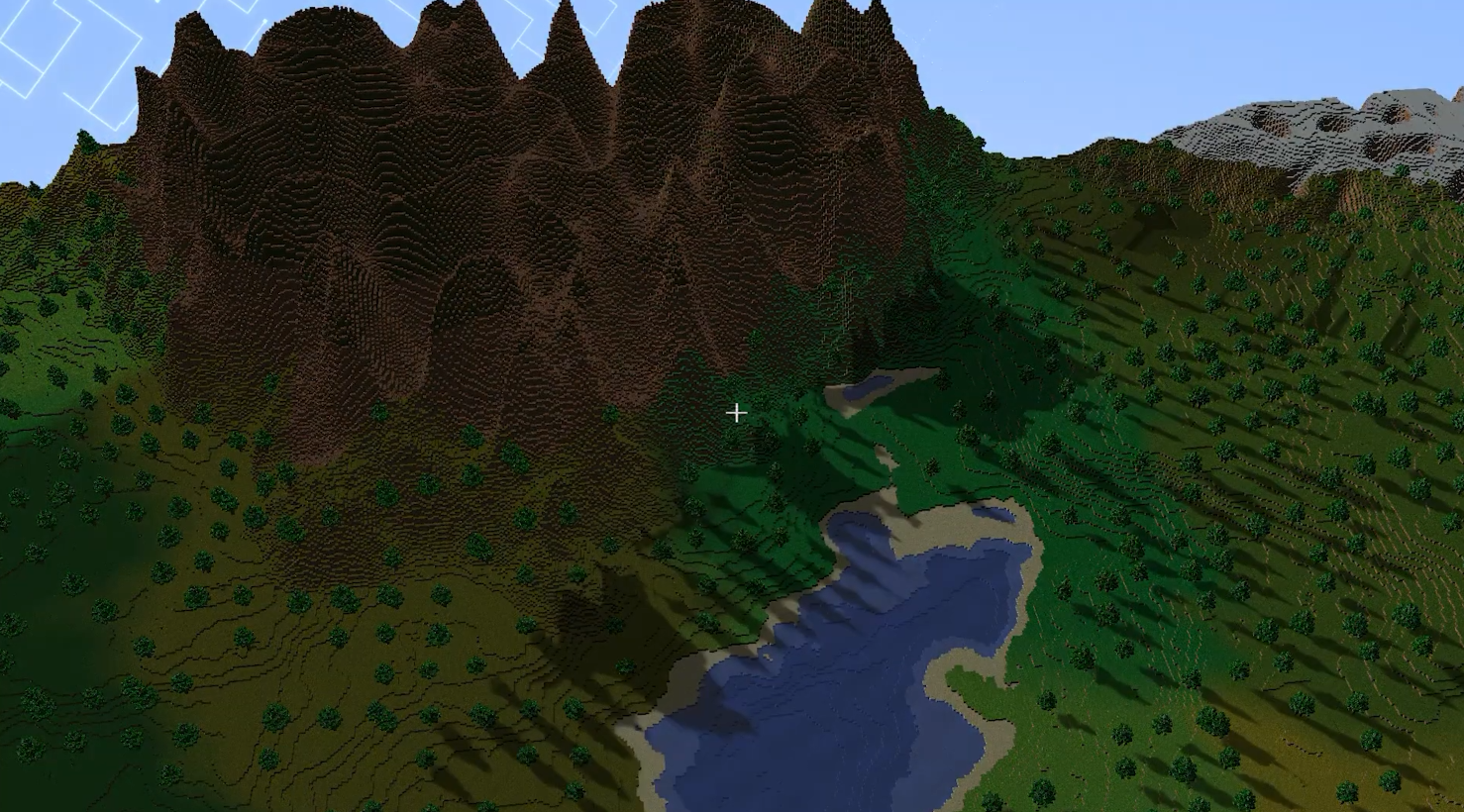
My team and I built a voxel game engine inspired by Minecraft, using C++ and GLSL. This experience taught me a lot about GPU rendering pipelines. My contributions include:
- Procedural biome assets
- Procedural biome grass coloring
- Water waves and specular reflection
- Post-process camera overlay for water and lava
- Distance fog
- Player physics
- Procedural cave generation
Procedural Assets
I created 3 procedural assets: normal trees, pine trees, and ice spikes. Their sizes and appearances sample their y-positions as an efficient way to obtain randomness. They are placed along the x-z-plane with poisson disk-sampling to keep them roughly evenly spaced within their chunk.
Procedural Grass Coloring
Using the 2 Perlin noise functions which determine the biomes, I interpolate between multiple different grass colors in the lambert fragment shader for grass blocks.
Water Waves
The water from the fragment shader is distorted using the sum of multiple sine waves. Using the partial derivatives of this sine function, I calculate the normals at each point and then use the current direction of the animated sun to add the specular highlights.
Post-Processing
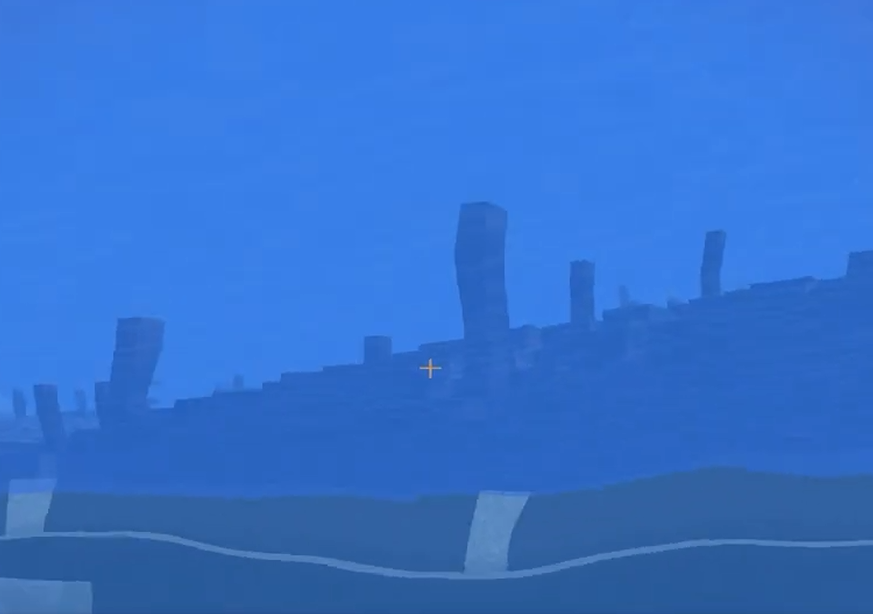 When in water and lava, I use a vignette, followed by a distortion the screen’s UV coordinates with Perlin noise. For the water, I use a blue tint to make the screen appear desaturated, and I use a red tint with more Perlin noise when in lava to try to imitate the viscosity. When in lava, red-tinted distance fog is enabled to emulate the Minecraft lava’s opacity.